
This research study is being conducted as a part of the Brain Function and Recovery Lab at the University of Buffalo
Research Study Information
Are you between 50 and 80 years old? You may be eligible to participate in the BRIM-Aging Research Study, which is exploring whether computer-based thinking and memory activities, paired with a safe, low-intensity brain stimulation technology, can help support cognitive function in adults experiencing mild memory changes.
Are you Eligible?
You May Qualify If You:
- Are between 50 and 80 years old
- Are experiencing mild changes in memory, attention, or concentration, or have been diagnosed with Mild Cognitive Impairment (MCI) associated with aging or another condition
(Note: Individuals with stroke-related injuries are not eligible for this study.) - Are able to attend 10 in-person sessions at the Buffalo Occupational Therapy research site within 12 weeks of beginning the study
- Can provide informed consent and comfortably participate in basic cognitive and behavioral computer tasks
- Do not have implanted medical devices (such as pacemakers or deep-brain stimulators) that may interfere with noninvasive brain stimulation technology
You May Not Qualify If You:
-
Have metal implants or medical devices that could interfere with MRI or brain stimulation
-
Have a seizure history or conditions contraindicated for tDCS
- Are being treated with medication for depression or bipolar disorder
-
Are unable to safely complete testing
-
Are unable to attend all sessions
- You are or may be pregnant.
What is involved [Study Requirements]?
If you qualify, you will take part in a combination of computer-based thinking and memory activities and noninvasive, low-intensity brain stimulation delivered during some of those tasks.
Participation includes:
-
An MRI brain scan before and after the program (optional)
-
10 in-person sessions over approximately 12 weeks
-
Completing simple memory, attention, and thinking tasks on a computer
-
Brief questionnaires about your experience and comfort during the sessions
You can stop at any time.
Special note: No payment is offered for participation and participants may incur parking costs of up to $15 for MRI visits if they choose ramp parking.
Screening and Consent
~1 hour; Complete the screening assessment. We will review eligibility and medical history. If eligible, we will schedule a time for you to meet with a team member to complete consent paperwork. You can also schedule a time to discuss the details of the study at any time.
Baseline Testing
~90 Minutes; Complete brief memory, attention, and problem-solving assessments, along with questionnaires about daily thinking skills and mood.
Intervention Phase
Up to 12 weeks; Attend 1-2 sessions per week (similar to therapy) where you will complete computerized cognitive activities while receiving transcranial direct-current stimulation (tDCS). Each session lasts approximately 45-55 minutes. Before you leave each visit, you will complete some basic questionnaires.
Post-Intervention Testing
~90 minutes; Repeat the same assessments to measure changes over time.
Participant Benefits
-
Contribute to research on aging and brain health
-
Learn about your own thinking and memory through study assessments
-
Experience computer-based cognitive activities
-
Help advance future approaches to supporting cognitive function
Can you disenroll at any time?
-
Yes. Participation is completely voluntary, and you may withdraw from the study at any time, for any reason, without penalty or loss of benefits to which you are otherwise entitled.
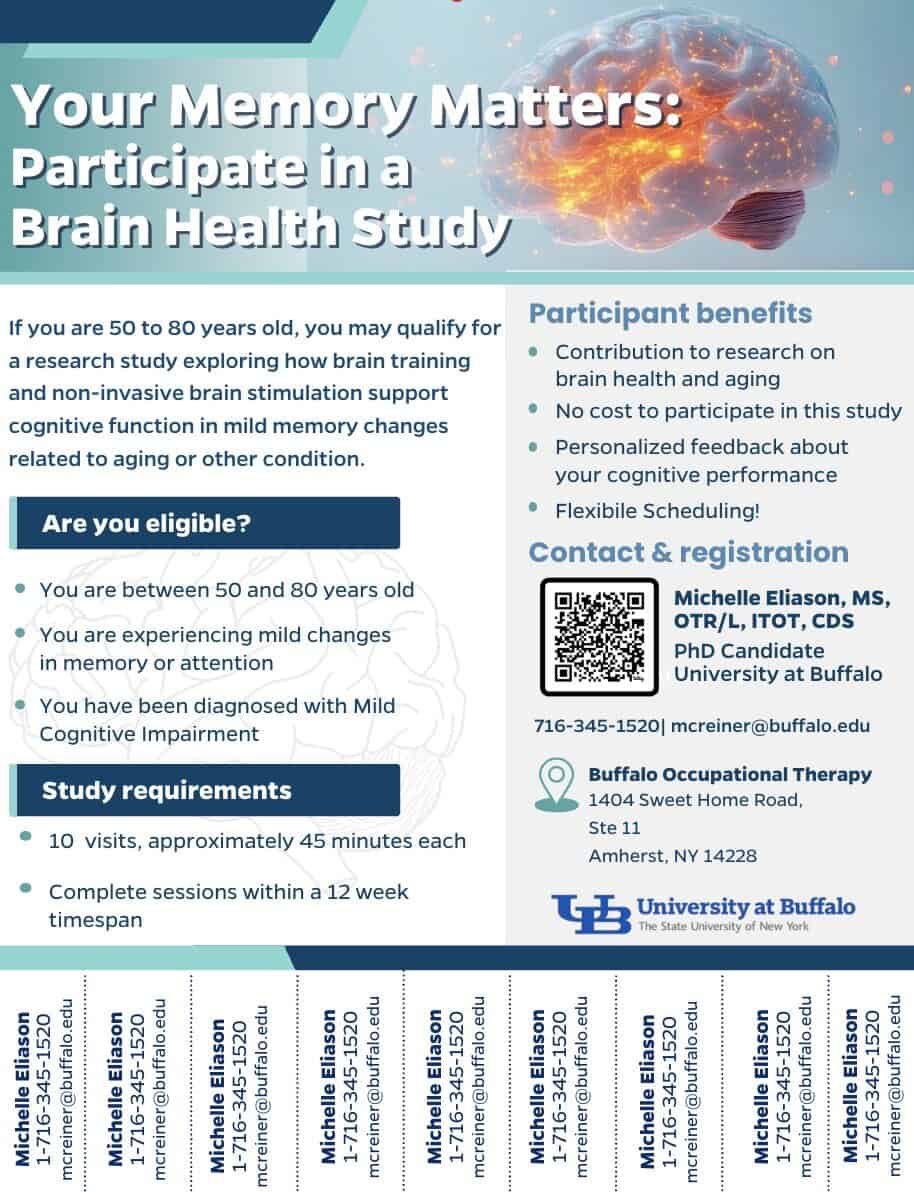
Download this flyer for a printed version of this information.
What is Transcranial Direct Current Stimulation?
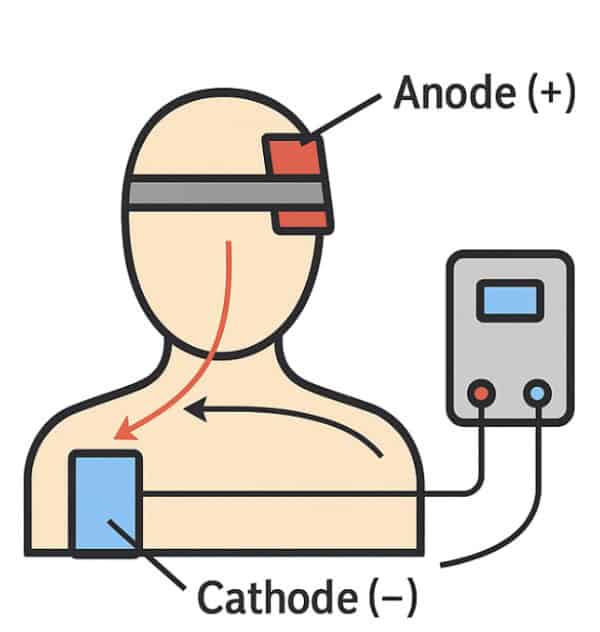
tDCS (transcranial direct current stimulation) is a noninvasive brain stimulation technique that uses a very low level of electrical current—about the strength of a household battery—to gently stimulate specific areas of the brain.
It does not cause the brain to fire or create shocks. Instead, it slightly shifts how easily brain cells can communicate during activities, which researchers study to understand learning, memory, and attention.
Most people feel little to nothing, or a brief tingling or warm sensation under the electrodes.
Serious side effects are rare, and the research team monitors your comfort and safety throughout each session.