Advanced Cognitive Therapy in Buffalo, NY
Your brain deserves more than a one-size-fits-all approach, so why choose Buffalo OT?
- We truly listen to your story and what you’re experiencing.
- We assess memory, movement, and medical history to understand the full picture.
- Our team has advanced training in neuro-based therapy — beyond typical programs.
- We design a plan that targets the right skills and the right brain systems for recovery.
If you’re noticing memory changes, foggy thinking, or slower processing — it may not be “just stress”.
Click below to book a cognitive evaluation with a Cognitive Neurorehabilitation Specialist.
What Happens Next?
Book a Cognitive Evaluation
Complete a thorough assessment with a Cognitive Neurorehabilitation Specialist.
Receive a personalized plan outlining your cognitive profile, treatment focus, and recommendations.
Begin targeted sessions that connect brain science to real-life function.
You are not “just getting older,” and you are not “overreacting.”
If your brain feels different, it deserves expert attention.
Click below to book a cognitive evaluation and start a plan that is as specialized as your brain.
What We Actually Do in Cognitive Therapy
Our work is hands-on, individualized, and grounded in brain science.
1. Comprehensive Cognitive Evaluation
Before we treat, we understand.
Your evaluation may include:
-
Memory & attention testing – what you can recall, how long you can stay focused, and how quickly you process information.
-
Executive function assessment – planning, problem-solving, organization, mental flexibility, and self-monitoring.
-
Functional cognition – how your thinking shows up in real life (medication management, finances, appointments, work tasks, driving readiness, household management).
-
Movement & balance screening – how your body and brain are working together (especially after stroke, concussion, or neurodegenerative diagnoses).
-
Medical and neurological history review – stroke, concussion, surgeries, medications, sleep, and other factors that impact brain function.
From this, we identify which brain systems are struggling and where you still have strong capacity to build from.
2. Targeted Cognitive Retraining
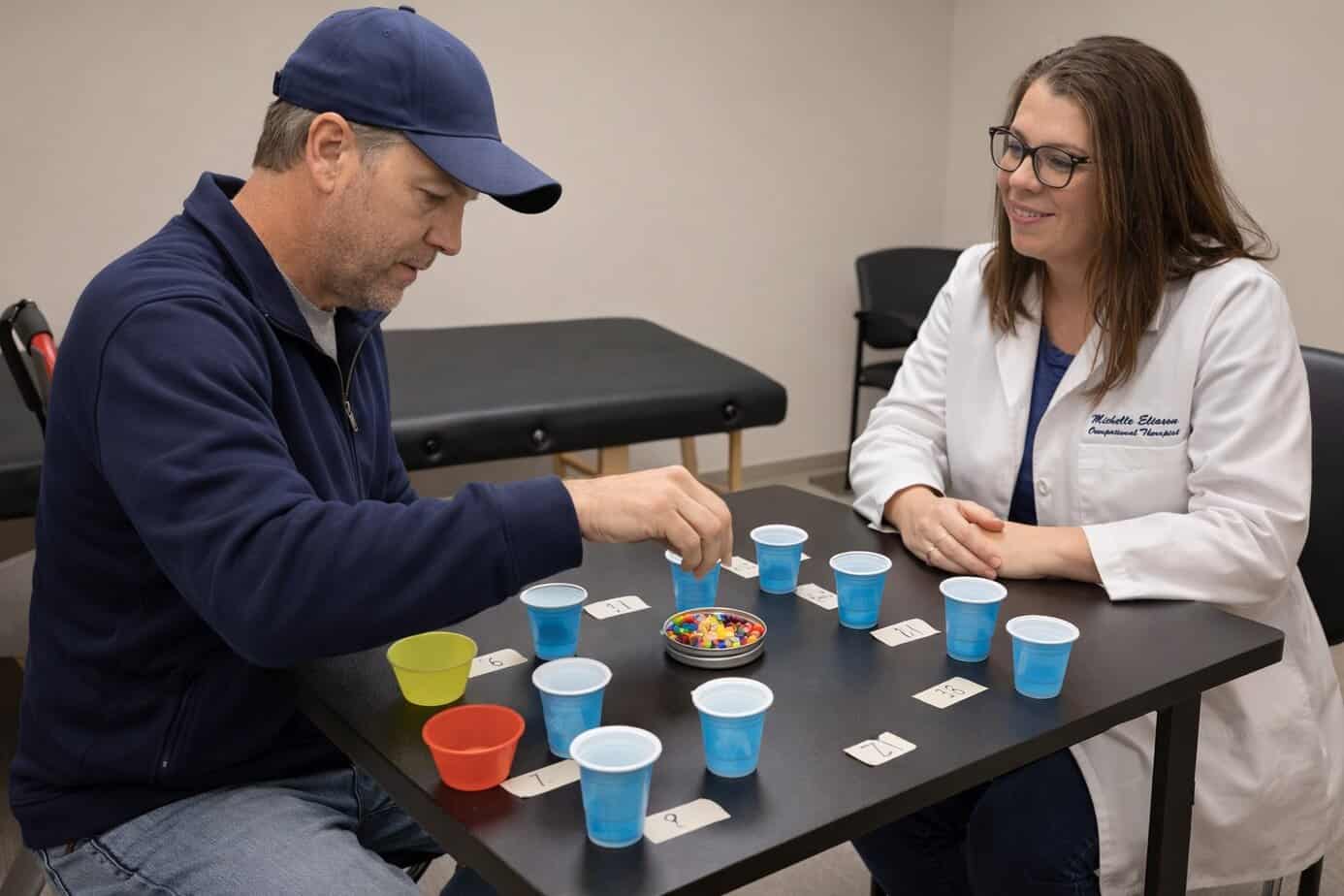
We use structured, therapeutic tasks to exercise specific brain networks — not just “keep you busy.”
Examples include:
-
Working memory training – remembering and using information over short periods (e.g., multi-step instructions, sequences, mental math, dual-task tasks).
-
Attention training – sustaining focus, filtering distractions, and switching between tasks.
-
Processing speed – increasing how quickly you can take in and respond to information.
-
Executive function exercises – planning, prioritizing, error-checking, and shifting strategies when something isn’t working.
These tasks are carefully graded so that you’re challenged but not defeated.
3. Functional Cognition in Real-Life Activities
Cognition doesn’t live on a worksheet.
We embed cognitive work directly into real activities, such as:
-
Managing appointments, calendars, and reminders
-
Organizing home or work tasks
-
Meal planning at an appropriate level
-
Medication routines or health-management systems
-
Financial organization and bill-paying strategies
-
Return-to-work or role-specific tasks (e.g., professional, caregiver, community roles)
The goal is always the same:
Can you carry this skill out of the clinic and into your everyday life?
4. Dual-Task & Cognitive-Motor Integration
Real life rarely asks you to do just one thing at a time.
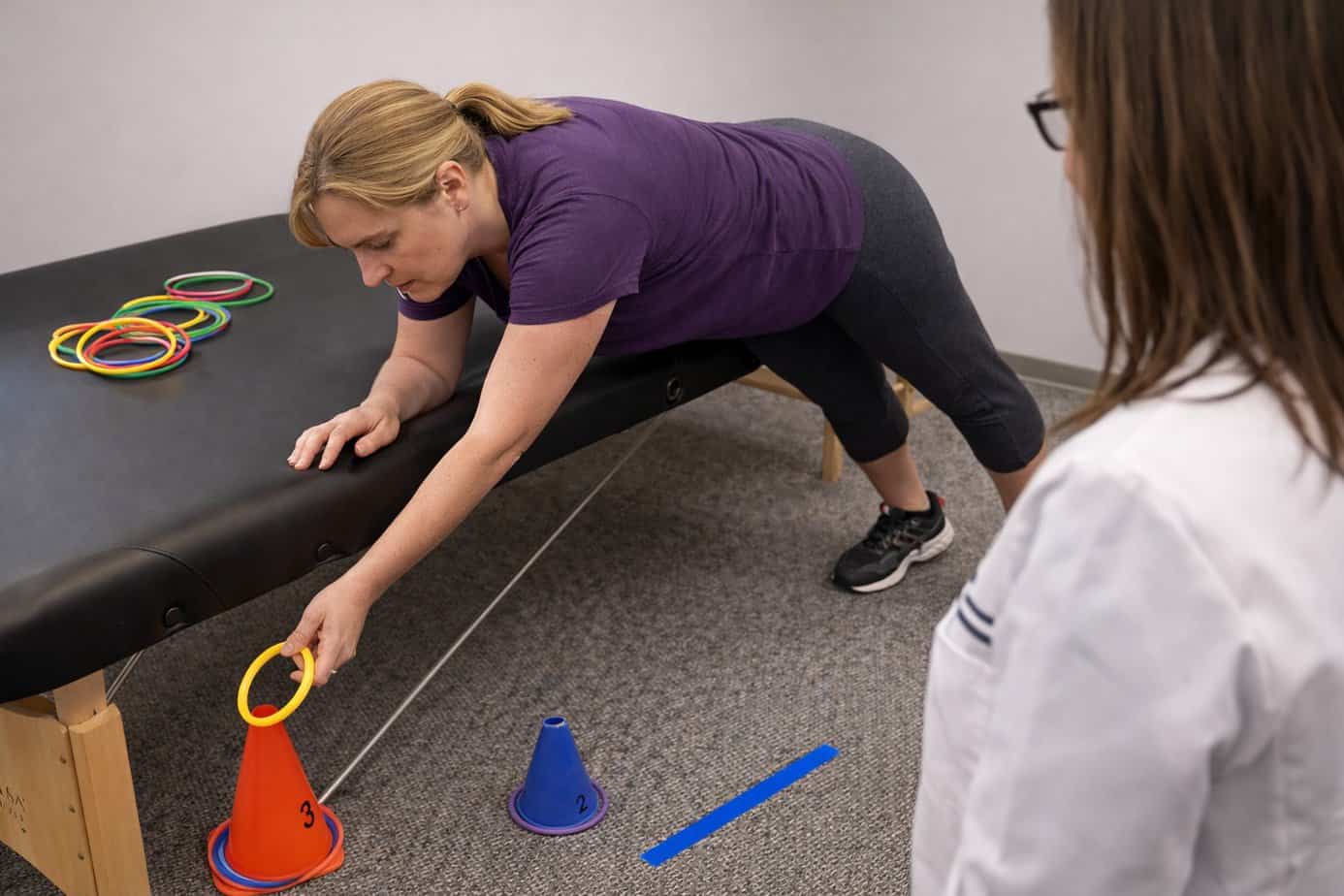
We combine movement and thinking to train the brain to handle complex, everyday situations:
-
Stepping patterns or balance tasks while recalling information or naming items
-
Visual reaction drills with memory or language tasks layered on top
-
Gait or balance training with concurrent cognitive challenge to simulate busy environments
This is especially important after stroke, concussion, or in neurodegenerative conditions where falls, fatigue, and cognitive overload become real risks.
5. Strategy Training & Compensations
Not every problem is solved by “making the brain stronger.”
Some problems are solved by working smarter, not harder.
We teach and customize:
-
External memory systems (planners, phones, alarms, whiteboards)
-
Routines and checklists that reduce cognitive load
-
Environmental modifications (how your space is set up to support brain function)
-
Communication strategies for you and your family (how to best give information, repeat, cue, or support independence without doing everything for you)
These strategies are practiced in session and adapted to your real life.
6. Education & Long-Term Management
Understanding why something is happening often decreases fear and frustration.
We provide:
-
Clear education on how stroke, concussion, or neurodegenerative conditions affect the brain
-
Guidance on what to expect over time and how to protect brain health
-
Support for spouses, partners, and family members on how to interact, cue, and support without taking over
Our goal is not just improvement now, but a long-term plan for managing cognitive changes over time.
What are Some of the Skills We Work On in Therapy?
Who We Help
Our cognitive therapy services are designed for adults who are experiencing:
-
Memory loss or “brain fog”
-
Difficulty keeping track of conversations or instructions
-
Trouble organizing, planning, or following through
-
Slower thinking after stroke, concussion, or other brain injury
-
Cognitive changes related to neurodegenerative conditions (e.g., Alzheimer’s disease, Parkinson’s disease, FTD)
-
Cognitive symptoms that are impacting independence, safety, or work